

A home that mirrors a pristine showroom is often a home that is fundamentally impossible to inhabit. We have become accustomed to chasing a “catalogue-perfect” aesthetic that demands constant maintenance and leaves little room for the realities of daily life. It is natural to feel that your living space should be a flawless reflection of success, yet this pursuit often results in an environment that feels sterile rather than supportive. You might even worry that inviting imperfection into a compact residence will result in a space that looks cluttered or neglected.
True wabi sabi interior design is not a celebration of mess; it is a rigorous discipline of choosing materials that possess the integrity to age beautifully. By understanding this ancient philosophy, you can move beyond the superficial trends to create a sincere, enduring sanctuary that prioritises your mental well-being. In this guide, we will explore how to balance modern functionality with authentic textures, ensuring your home becomes a grounded retreat that thrives whilst standing up to the unique demands of the Singaporean climate.
Key Takeaways
- Distinguish between rustic simplicity and clutter by understanding how the twin concepts of ‘Wabi’ and ‘Sabi’ define a home’s enduring character.
- Explore the intersection of Scandinavian functionality and Japanese philosophy to create a Japandi-inspired space that feels both efficient and soulful.
- Learn practical strategies for integrating wabi sabi interior design into compact HDB or Condo floor plans whilst maintaining an airy, open feel.
- Discover how to select and layer authentic materials that respond gracefully to the Singaporean climate and develop a unique patina over time.
- Understand the importance of professional rigour and CaseTrust accreditation when executing a renovation that relies on technical precision and material integrity.
Beyond the ‘Unfinished’ Look: What Wabi-sabi Interior Design Truly Represents
Wabi-sabi is often misunderstood as a simple aesthetic of decay or an excuse for neglect. It is neither. At its core, this worldview offers a profound re-evaluation of what we consider beautiful. Wabi refers to a rustic, understated elegance that finds richness in simplicity; it is the quiet confidence of an object that does not need to shout for attention. Sabi acknowledges the passage of time and the grace found in the aged, celebrating the unique patina that only years of use can provide. Together, the philosophy of wabi-sabi offers a framework for a home that feels deeply human and authentically lived-in.
In a city defined by glass towers and rapid urban change, many homeowners are turning to wabi sabi interior design to find a sense of permanence and peace. It acts as a psychological anchor. Whilst modern life in Singapore is often fast-paced and clinical, a wabi-sabi home provides a necessary respite from that chaos. This isn’t about “shabby chic” or cluttered living; rather, it is about thoughtful intentionality. Every texture, from the grain of a wooden table to the ripple in a lime-plastered wall, is a deliberate choice intended to foster a connection with the natural world.
The Myth of the Unfinished Space
There is a common misconception that embracing imperfection means accepting poor workmanship. In reality, achieving a refined wabi-sabi look requires immense technical rigour. High-quality craftsmanship is essential to ensure that “raw” materials are structural, safe, and pleasant to the touch. There is a vast difference between a material that is naturally textured and a surface that is simply poorly finished. Wabi-sabi is a disciplined appreciation for the natural lifecycle of materials, requiring a steady hand to execute correctly.
Why Sincerity Matters in Modern Design
A home should be a sanctuary that supports your well-being, not a showroom that demands constant perfection. When a space allows for the occasional scratch or the natural darkening of timber, it removes the anxiety of maintenance. This fosters a genuine sense of groundedness. An experienced interior designer acts as a guide in this process, helping you distinguish between what is merely a trend and what is a sincere reflection of your lifestyle. By prioritising materials that age with dignity, you create a residence that feels more substantial and soulful over time.
The Anatomy of Authenticity: Core Principles and Common Myths
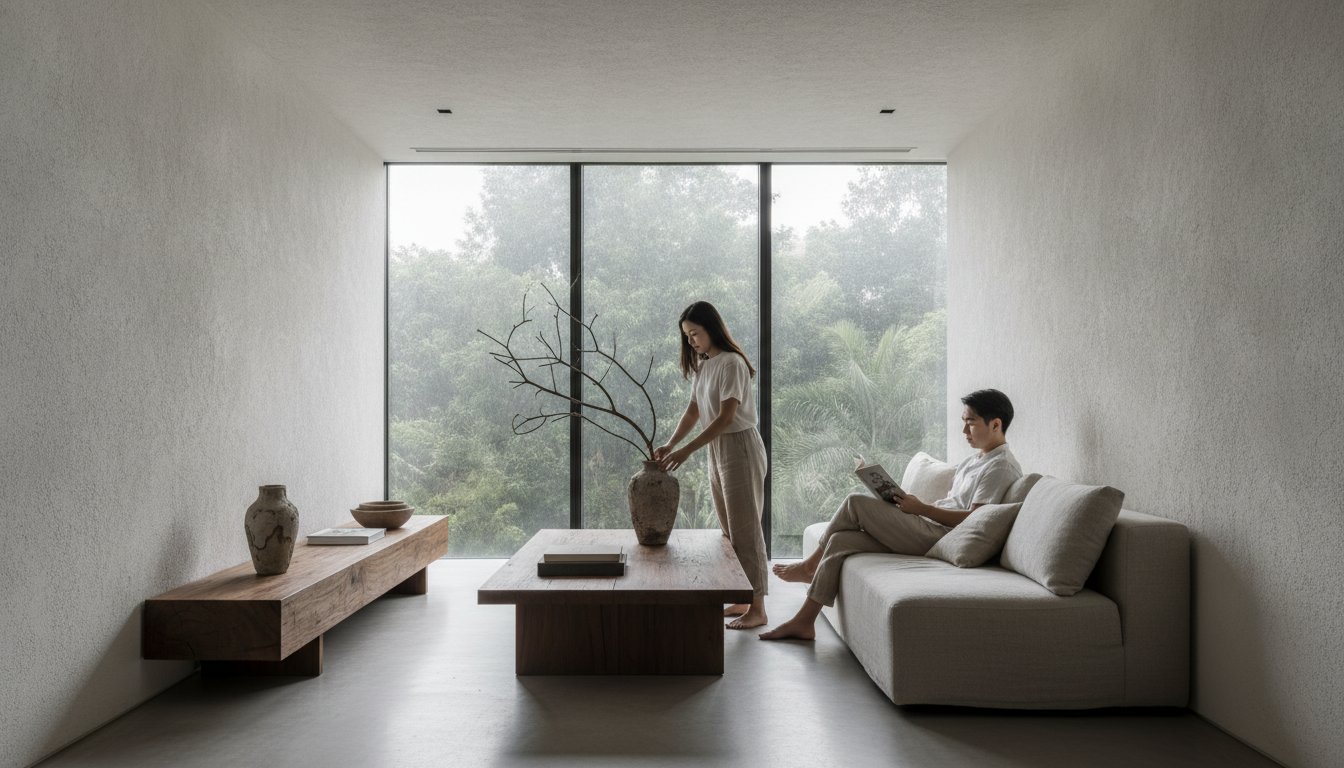
Minimalism seeks the void. Wabi-sabi seeks the story. Whilst traditional minimalism often strives for a sterile, showroom-perfect finish, wabi sabi interior design celebrates the lived-in character of a home. This distinction is vital for anyone attempting to create a space that feels like a sanctuary rather than a gallery. By favouring asymmetry and irregularity, we move away from the manufactured precision of modern machinery and return to the organic flow of nature. This approach ensures that a room feels balanced without being repetitive, allowing the eye to rest on unique details rather than searching for flaws in a perfect surface.
A neutral colour palette is the foundation of this discipline. We look to the muted tones of wet stone, weathered timber, and sun-bleached clay to inform our choices. These colours do not compete for attention; they provide a quiet backdrop that allows the textures of the home to speak. Observing wabi-sabi design in practice reveals that the most successful spaces are those that embrace the natural variations found in raw materials. It is a sophisticated way of bringing the outdoors in, creating a residence that feels grounded and permanent.
Wabi-Sabi vs. Minimalism vs. Japandi
Understanding the nuances between these styles is essential for a successful renovation. Minimalism focuses on the removal of clutter to achieve a sense of order. Japandi, a popular hybrid, blends this Scandinavian functionality with Japanese aesthetics to create warm, efficient spaces. Wabi-sabi, however, is often the most forgiving style for growing families. It welcomes the natural wear of daily life, where a small scratch on a solid wood table is viewed as a mark of history rather than a blemish. You don’t have to sacrifice modern technology to achieve this look; instead, we integrate matte finishes and concealed solutions to ensure your devices don’t disrupt the organic atmosphere.
The Discipline of Material Selection
Authenticity begins with the choice of materials. Natural wood, unpolished stone, and lime wash are the pillars of a sincere wabi-sabi interior. These materials are selected specifically because they possess the integrity to develop a patina over time. A stone countertop that darkens with use or a timber floor that reveals its grain more clearly as it ages adds value to the home. True wabi-sabi is an investment in longevity, not a temporary trend. This commitment to quality ensures that the residence remains relevant and beautiful for decades, reflecting a deep respect for the materials and the life lived amongst them.
Orchestrating Imperfection: Practical Implementation in HDB and Condo Spaces
Implementing wabi sabi interior design within the geometric constraints of a standard HDB or BTO layout requires a departure from conventional “boxed-in” thinking. In these compact environments, the objective is to soften the rigid lines of modern architecture through diffused lighting and intentional shadows. Rather than relying on harsh overhead beams, we utilise warm, layered light sources to create a sense of depth. This approach draws inspiration from the traditional Japanese aesthetics of wabi-sabi, where the interplay of light and air flow is as crucial as the physical objects within the room. By allowing shadows to exist, we create a sanctuary that feels expansive and serene.
To ensure the “raw” look remains structural and safe, meticulous interior design project planning singapore is essential. Without a disciplined framework, an attempt at a rustic finish can easily result in a space that feels unfinished or poorly maintained. A professional approach ensures that every textured surface is treated with the necessary technical rigour. This planning phase allows us to map out how natural light will move through the space, ensuring the home feels organic rather than manufactured.
Adapting to the Singaporean Climate
Singapore’s high humidity poses a unique challenge for natural materials. We recommend porous finishes like lime wash, which allow walls to breathe whilst providing a rich, tactile depth that paint cannot replicate. For timber, selecting species with high oil content or applying specific matte sealants helps maintain integrity against tropical moisture. Durable stones with honed finishes offer the desired organic feel whilst remaining resilient enough for the rigours of a busy household. This careful selection ensures your home ages gracefully in our specific environment.
Spatial Flow and Asymmetry
The “beauty of the void” is a core tenet often overlooked in local renovations. By leaving certain areas empty, we allow the home to breathe and the inhabitants to feel a sense of mental clarity. Furniture should be placed with an eye for asymmetry, avoiding the stiff, mirrored layouts common in showrooms. To maintain this minimalist facade, we utilise bespoke carpentry to conceal the clutter of modern living. This ensures that the home remains a disciplined sanctuary, where every design choice is made with empathy and technical care.
The Disciplined Sanctuary: Crafting a Sincere Wabi-sabi Home with Professional Maturity
A successful transformation requires more than a shared aesthetic vision; it demands a partnership built on mutual respect and intellectual depth. The journey towards an authentic wabi sabi interior design is a collaborative process where a sincere designer translates the homeowner’s intentions into a tangible reality. This is not a project of mere decoration, but a rigorous exercise in engineering and art. By choosing a partner who values technical precision as much as creative expression, you ensure that the final result is a residence that feels like a sanctuary from the moment of handover. It is a transition from a complex construction site to a serene, lived-in environment that prioritises your peace of mind.
Professional accountability is the bedrock of this process. When executing complex, material-heavy designs that rely on natural stone and specialised plasters, CaseTrust accreditation becomes vital. It serves as a mark of reliability, reassuring you that the studio’s internal processes are as organised and well-considered as their public-facing work. This structural discipline allows the creative vision to flourish without the anxiety of mismanagement. Ultimately, a wabi-sabi home is designed to evolve with your family, gaining character and becoming more beautiful as the years pass.
The Role of Professional Project Management
Achieving a look that appears effortless requires a highly structured timeline and meticulous oversight. Technical expertise is paramount when applying specialised finishes such as micro-cement or textured plaster, as these materials demand a steady hand and an understanding of how they cure in our climate. We encourage you to view the hdb renovation singapore journey as an art form in itself, where every stage of the workflow is executed with quiet pride and professional rigour. This systematic approach ensures that the “imperfections” of the style are intentional and safe.
Building Your Sincere Sanctuary
We invite you to look past superficial trends and embrace a home that reflects your true self through the lens of wabi sabi interior design. A residence should be a grounded retreat, built upon a foundation of quality materials and thoughtful intentionality. By engaging with a partner who values craftsmanship over commercial volume, you invest in a space that offers enduring value and mental calm. This commitment to quality ensures that the final result is not just a renovated property, but a sincere reflection of a life lived with purpose and clarity.
Cultivating a Home That Ages with Grace
Transitioning a residence into a sincere sanctuary requires a shift from chasing sterile perfection to embracing authentic character. We have explored how wabi sabi interior design is a disciplined choice to use materials that possess the integrity to age beautifully over time. By prioritising tactile textures like lime wash and natural timber, you create a space that responds effectively to the Singaporean climate whilst offering a profound sense of mental calm. It’s about building a home that doesn’t just look good on day one, but becomes more meaningful as it matures with your family.
This transformation is most successful when backed by technical rigour and professional accountability. As a CaseTrust-accredited studio, we provide the peace of mind and deposit protection necessary for complex, material-heavy renovations. Our expertise in high-quality transformations for both HDB flats and private estates ensures that your creative vision is always balanced with engineering excellence and a methodical workflow. We take quiet pride in guiding homeowners through this intentional process and ensuring every detail serves a purpose.
Begin your intentional home transformation with InteriorDesigner.sg and discover the lasting value of a residence designed with sincerity. We look forward to helping you ground your living space in authenticity and peace.
Frequently Asked Questions
Is wabi sabi interior design more expensive than a standard modern renovation?
Costs depend primarily on the integrity of the materials selected rather than the complexity of the visual aesthetic. Whilst a standard renovation might utilise synthetic laminates to mimic natural textures, a sincere wabi-sabi approach prioritises authentic solid wood and unpolished stone. These high-quality materials require a larger initial investment, yet they offer superior longevity and develop a unique character that disposable alternatives cannot replicate.
Can I achieve a wabi-sabi look in a small 3-room BTO flat without it looking cluttered?
Yes, this philosophy is actually ideal for compact Singaporean flats because it celebrates the “beauty of the void.” By leaving certain areas intentionally empty and using bespoke carpentry to conceal modern clutter, you allow the home to breathe. The focus shifts to a few meaningful, high-quality pieces that provide tactile depth without overwhelming the limited square footage of a smaller residence.
How do I maintain lime wash walls or natural stone in Singapore’s humid climate?
Proper maintenance begins with technical rigour during the application phase and ensuring adequate airflow throughout the home. Lime wash is naturally breathable and antimicrobial, which makes it remarkably resilient against the tropical moisture found in Singapore. For natural stone, applying high-quality matte sealants prevents deep staining whilst allowing the material to develop its signature patina over the years.
Is wabi-sabi the same as the ‘Muji’ style often seen in Singapore?
No, these styles are distinct despite their shared roots in Japanese simplicity. The Muji aesthetic focuses on functional uniformity, mass-produced efficiency, and a clean, brand-new appearance. Wabi-sabi, however, finds its soul in the irregular, the handcrafted, and the passage of time. It is a more disciplined and intellectual approach that values the story behind an object over its perfect, out-of-the-box condition.
Does a wabi-sabi home have a lower resale value because of its ‘imperfect’ look?
Resale value is typically protected by the timelessness and quality of the materials used in the renovation. Unlike hyper-polished trends that look dated within a few years, a home finished with natural timber and stone retains a sense of “quiet luxury” that appeals to discerning buyers. The enduring nature of these finishes often makes the property stand out amongst more clinical, trend-heavy listings.
What are the best colours to use for a sincere wabi-sabi palette?
A sincere palette is grounded in the muted tones of the natural world, such as weathered stone, sun-bleached clay, and deep earth. These shades don’t compete for attention; instead, they provide a quiet backdrop that allows the textures of the home to speak. We often recommend using a range of greys, beiges, and off-whites to create a soft, diffused environment that fosters a sense of groundedness.