

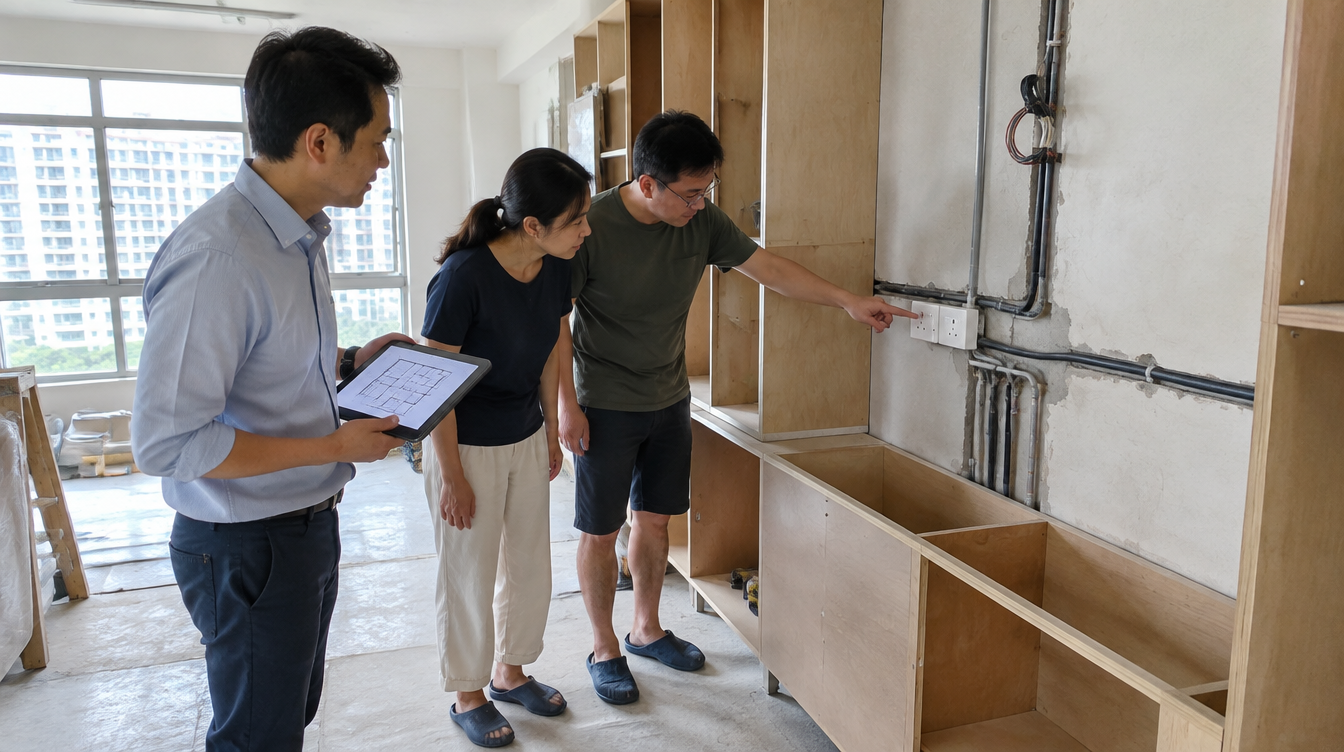

Most Singapore homeowners budget carefully for materials, negotiate hard over quotations, and pick a contractor after weeks of research, yet many never set foot on site again until the handover walkthrough. The gap in between, the weeks when hacking gives way to wiring and wiring gives way to carpentry, is exactly when small problems are cheapest to fix and easiest to miss. A pipe routed on the wrong wall, a socket placed a foot too low, a tile laid without adequate fall towards the drain: each is a five-minute conversation during construction and a costly retrofit once the wall is closed up.
This is where a simple renovation site visit checklist earns its keep. It does not require construction training or a hard hat collection. It requires knowing which stages matter most, what to look for at each one, and when to trust the process versus when to ask a question before the next trade moves in.
Why Site Visits Belong in Your Renovation Timeline
A renovation that runs smoothly on paper can still go wrong on site, and the earlier a mismatch between the 3D rendering and the physical build is caught, the less it costs to correct. The site-visit schedule itself is usually mapped out early, during your interior design project planning, so that key milestones such as hacking completion, electrical rough-in and carpentry installation are flagged well in advance instead of being decided on the fly. A named project manager should already be walking the site regularly and reporting back, but a homeowner who visits at the right moments brings a second pair of eyes that knows the household best, whether that means confirming a shelf height that suits a shorter family member or checking that a planned reading nook actually gets the natural light the rendering promised.
Hoarding and Demolition: The First Real Look
The first genuinely useful site visit usually comes once hoarding is up and any hacking work is complete. This is the moment to check that walls marked for removal have actually come down, that the ones meant to stay are still structurally intact, and that any structural changes match what was actually approved, whether that is an HDB renovation permit or an MCST or other authority sign-off. The flat’s original defects, the ones flagged during the pre-renovation inspection, should also have been repaired instead of quietly built over.
Confirm too that protective covering has gone down over existing fixtures the renovation is not meant to touch, such as windows, door frames or a bathroom being left as is. Dust and debris are unavoidable during hacking, but a contractor who has not bothered to protect what stays untouched is often the same one who rushes through the stages that follow.
A Practical Checklist for Every Site Visit
The specifics change from stage to stage, but a handful of checks apply at almost every visit, whether the work in progress is a four-room HDB flat or a landed property extension.
- Compare the work against the latest floor plan and 3D rendering, not memory of an earlier version.
- Check that electrical points, switches and light fittings are positioned where the household will actually reach for them.
- Look for visible water stains, uneven flooring or hairline cracks that were not there on the previous visit.
- Ask the project manager to point out anything that changed from the original plan and why.
- Photograph problem areas on the spot, with a note of the date, instead of relying on memory later.
- Confirm that materials on site match what was specified and quoted, down to the brand and finish.
Carpentry and Finishing: Where the Details Add Up
Once carpentry begins, the checks get more specific to how the household actually lives. A kitchen cabinet that looks identical to the rendering can still open awkwardly against a fridge door, and a wardrobe that matches the drawing on paper can still leave too little clearance for a wheelchair or a stroller to pass. This is the stage to test drawers, check that soft-close hinges are fitted where they were quoted, and stand in front of a mirror or vanity at the height it will actually be used, not just glance at it from the doorway. Painting and flooring towards the end of this stage are easier to inspect in natural daylight than under a single work light, so a visit timed for late morning or early afternoon tends to reveal more than one after dark.
Colour that looked right on a small paint chip can read differently across an entire wall, and it is far cheaper to ask for a touch-up now than after furniture has moved in. Singapore’s Building and Construction Authority publishes workmanship standards that give a useful reference point for finishing quality, even on a scope far smaller than the building projects those standards were designed for.
When to Pause and Ask Questions
Not every imperfection at this stage is a red flag. Construction dust, temporary gaps around a newly installed door, or a slightly uneven first coat of paint are all normal and usually resolved before completion. A few things, however, deserve an immediate question instead of waiting for the next visit.
- Work that has visibly deviated from the approved plan without any explanation offered.
- Plumbing or electrical points that appear in a different location from what was agreed.
- Signs that a wall marked as load-bearing on the original plan has been altered.
- The same defect recurring across visits despite earlier promises to fix it.
Final Handover and Closing the Loop
The last walkthrough before keys and access are formally handed back should feel routine, not like the first real inspection, which is why the visits in between count for so much. Bring the original list from earlier stages and confirm each item has actually been resolved, not simply marked as done. A twelve month workmanship warranty offers real protection, but it works best alongside a paper trail built during construction, not a single memory of what was promised months earlier.
Renovation is stressful enough without wondering whether anyone is truly watching the details on your behalf. A homeowner who visits at the right stages, asks direct questions, and keeps a simple record is protecting the investment a home renovation represents, not being difficult. If you would rather have a project manager coordinating these checks with you from hacking to handover, feel free to get in touch with our team for a complimentary consultation.