

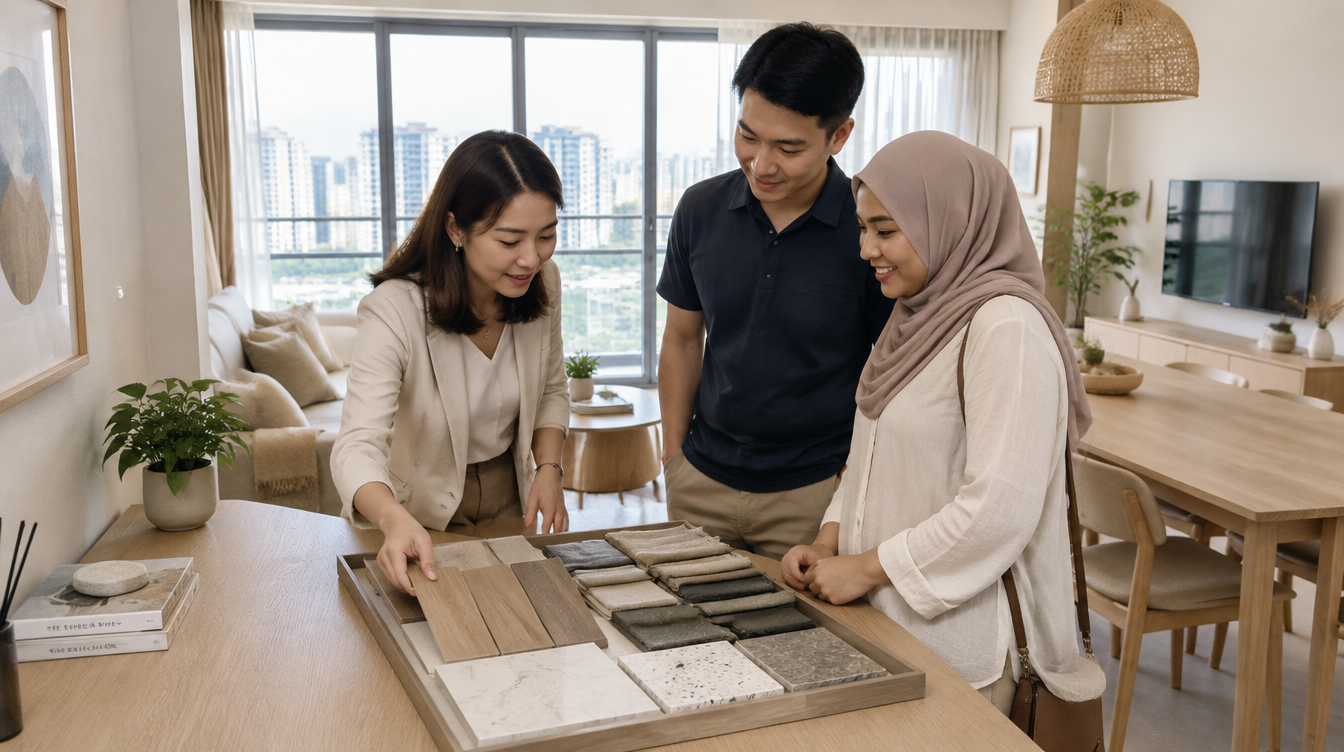

A homeowner picks a stone-look countertop sample under the bright halogen lights of a showroom, then watches it look completely different once it is sitting in the muted daylight of an actual Singapore kitchen two months later. Or worse, the timber-look flooring that seemed perfect in the catalogue starts lifting at the edges within a year, because nobody mentioned how differently engineered timber behaves once humidity swings between an air-conditioned bedroom and a naturally ventilated corridor.
Renovation budgets in Singapore are stretched thin enough without paying twice for the same surface. Choosing renovation materials sits at the intersection of practical decisions in a home: how a space looks now, how it copes with tropical humidity, and how much upkeep it demands five years down the line. Getting this right takes more than an eye for design. It calls for understanding how a handful of everyday materials actually behave in Singapore homes, long after the show flat gloss has worn off and daily life has settled in.
Why Humidity Changes the Calculation
Singapore’s climate sits at a near-constant 80 percent relative humidity, climbing higher during the monsoon months, and that single fact reshapes which materials genuinely belong in a home here. Solid timber expands and contracts with moisture in ways that show up as gaps, warping or cupping within a few seasons, especially near windows exposed to sudden tropical downpours. Untreated natural stone can absorb ambient moisture and stain more readily in humid bathrooms. None of this means avoiding timber or stone altogether. It means choosing the right grade, finish and installation method for a climate that behaves nothing like the temperate-climate catalogues many renovation materials are originally marketed for.
Flooring and Surfaces Built for the Climate
Flooring takes the most daily punishment in any home, and it is also where humidity-related material failures show up fastest and most visibly. The right choice depends less on personal taste and more on where in the home the material sits, how much foot traffic it takes, and how forgiving it needs to be of Singapore’s swings between air-conditioned and naturally ventilated zones.
- Engineered timber (not solid): more dimensionally stable across humidity swings, and well suited to living and dining areas
- Large-format porcelain tiles: durable, low-maintenance, and well suited to kitchens, bathrooms and balconies exposed to moisture
- Vinyl and SPC flooring: cost-effective, water-resistant, and increasingly convincing in realistic timber and stone finishes
- Natural stone such as marble or granite: striking but porous, so it needs proper sealing and should stay clear of consistently damp areas
- Homogeneous tiles: a practical, budget-conscious choice for service areas like kitchens and utility yards
Worktops face a similar set of trade-offs. Quartz composite has become the default recommendation for Singapore kitchens because it resists staining and scratching without the sealing upkeep that natural stone demands, though it can be more vulnerable to prolonged direct heat than granite. None of these options are universally right. The sounder approach weighs each material against the room’s actual conditions, not the showroom lighting it was chosen under.
Where Material Choices Get Tested Hardest
Kitchens and bathrooms are unforgiving rooms for material mistakes, because they combine sustained moisture, temperature changes and heavy daily use in a small footprint. A cabinet carcass in ordinary chipboard will swell and delaminate far faster in a Singapore kitchen than the same product would in a drier climate, which is why moisture-resistant board and properly sealed edges earn their cost here more than the specification sheet might suggest.
Waterproofing beneath tiled surfaces is not a cosmetic decision either. Poor waterproofing at the screed layer is one of the most common causes of ceiling leaks between HDB flats, and it is far cheaper to specify correctly at the outset than to break open finished tiling later to fix it.
Bathroom fittings deserve the same scrutiny. Chrome and stainless-steel fixtures generally outlast brass-plated alternatives in humid, frequently wet environments, and the grout chosen between tiles affects how much mould control a household ends up doing every weekend for years afterwards.
Matching Finishes to How the Household Actually Lives
The best material for a young family with children differs from the best material for a couple who work from home and entertain occasionally, even within an identical floor plan. A household with pets or small children benefits from slip-resistant, scratch-tolerant flooring over a pale, high-gloss finish that shows every mark. A quieter household with more discretionary budget might prioritise the tactile warmth of engineered timber over the practicality of vinyl, since fewer spills and less daily wear make upkeep less of a concern. Material selection, done properly, starts with an honest conversation about daily routines instead of a scroll through a design mood board.
Getting the Specification Right the First Time
This is where craftsmanship and process count for as much as the material itself. A well-chosen quartz worktop installed with poor seams, or waterproofing rushed to hit a handover date, will fail regardless of how good the underlying material was. This is also where 3D renderings for your home reno earn their keep, letting homeowners see how a proposed material actually reads in their own layout and lighting before a single tile is ordered, instead of relying on a small showroom sample.
It helps to work with a designer and contractor who explain the trade-offs honestly, not simply upsell the newest trend, and who put material specifications in writing as part of a transparent, itemised quotation. HDB’s own renovation guidelines set out clear requirements for works like waterproofing and flooring, and BCA’s guidance on building fixtures covers how these materials should be installed and maintained for a longer service life. Both are useful reading before finalising a specification.
Designing for the Long Term
Materials chosen for how they perform, not just how they photograph, tend to be the ones a household stops noticing after the first few months, in the best possible way. If you are weighing up flooring, worktops or finishes for an upcoming renovation, get in touch to talk through what genuinely suits your home and your budget.